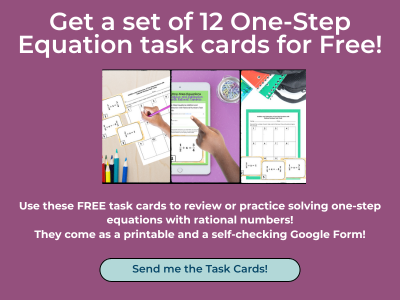
Math can be tough for students and often leads to frustration. Using task cards in middle school math is a helpful tool that can change that. They make hard concepts easier to understand and encourage students to learn by doing. While using task cards in math, students work together, solve problems, and enjoy math in a fun, engaging way.
In this blog, we’ll look at fun and creative ways to use task cards in middle school math classes. Whether it’s group work or independent learning, there are so many ways to use them. If you’re a teacher wanting to liven up your lessons or a parent looking for helpful tools at home, task cards can make math more enjoyable and easier to understand. Let’s explore how they can help your students enjoy learning math!
Benefits of Using Task Cards in Middle School Math
Using task cards in math offers many benefits that can make math more effective and engaging for students. Task cards encourage active learning. Instead of just filling out worksheets, students get to solve problems, talk through their thinking with classmates, or even move around the room to complete different tasks. This hands-on approach builds critical thinking and helps students connect more deeply with the material.
How to Use Task Cards in Math Class
There are many fun and creative ways to use task cards in your math lessons. One idea is to turn them into a scavenger hunt. Hide task cards around the classroom or school, and let students search for them using clues. Each card includes a math problem they must solve before moving on. This adds movement and excitement to learning.
Another great option is using math centers or stations. Set up different spots in your classroom, each with a specific math skill and a set of task cards. Students rotate through the stations, practicing a variety of skills in a hands-on, interactive way.
Task cards also work well for peer teaching. Pair students up and let them take turns solving and explaining problems to each other. This builds understanding, confidence, and communication skills.
By using task cards in these creative ways, you can make math more active, engaging, and fun for your students.
Math Topics for Task Cards
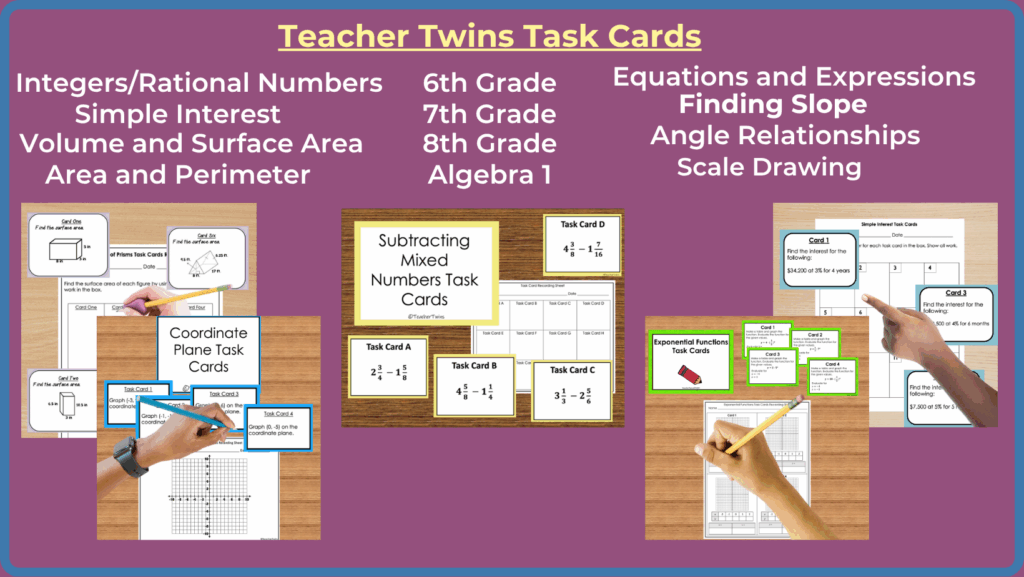
Task cards are extremely flexible and can be used with almost any math topic. For younger students, they’re great for practicing basic skills like addition, subtraction, multiplication, and division. Each card can have a simple problem, and students can work through them alone or with a partner. This gives plenty of practice and helps build strong math foundations.
For older students, task cards can cover more advanced topics like algebra, geometry, or even calculus. Algebra cards might include solving equations, factoring, or graphing. Geometry cards can focus on shapes, theorems, or coordinate grids. By matching the cards to specific topics, teachers can give students focused practice on what they need most.
Using task cards across different topics helps make math lessons more complete, targeted, and engaging.
Using Digital Task Cards in Middle School Math
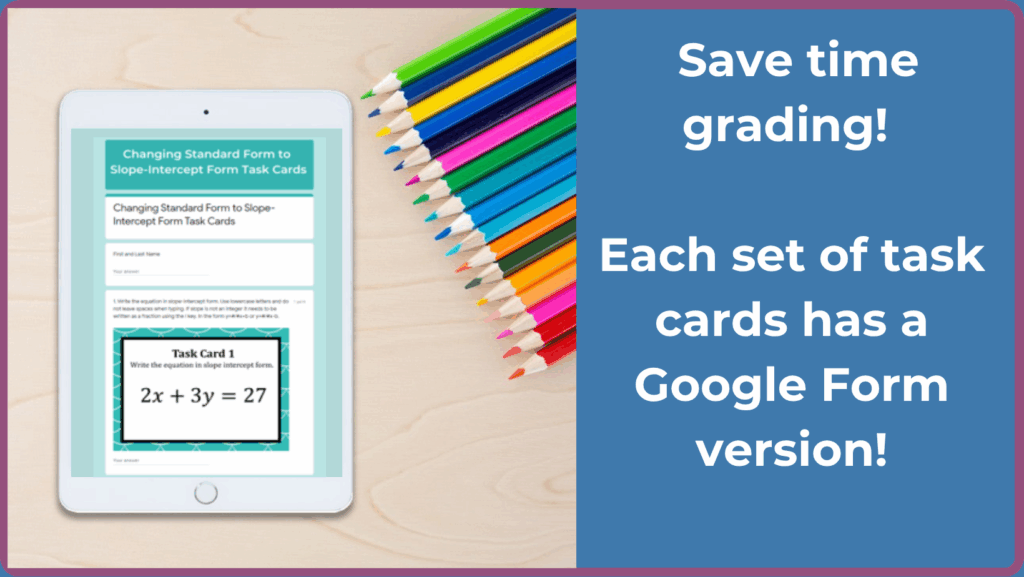
With today’s technology, digital task cards are becoming more popular. These electronic versions of traditional task cards offer many benefits, like easy access, interactive features, and the ability to track student progress. They can be used on tablets, laptops, or interactive whiteboards, making them useful for both classroom and remote learning.
Digital task cards also often have built-in tools to track how students are doing. Teachers can quickly see who needs help and give feedback right away. This information helps teachers plan lessons and support each student better. Thanks to technology, task cards have become an even more powerful and flexible way to improve math learning.
You can create your own digital task cards to use in your math classroom. Check out the following blog for step-by-step directions.
Using Task Cards in Math to Assess Students
Task cards can be a useful tool to check how well students are learning. One way to use them is for formative assessment. After students finish a set of task cards, you can review their answers to see what they understand and where they need more help. This information can guide your future teaching. Task cards also work well for quick checks during lessons, so you can give immediate feedback and adjust your instruction as needed.
Task cards can also be part of summative assessments. For example, use or create a set of cards that cover the main ideas from a unit and have students complete them at the end of the topic, either alone or in groups. This helps you get a full picture of their understanding.
Conclusion
In conclusion, task cards are a powerful and flexible tool that can greatly improve math learning. They break down difficult concepts, encourage active participation, and can be adapted to fit the needs of all students. Whether through simple question-and-answer cards or more interactive and group activities, task cards make math lessons more engaging and fun.
By using task cards across different math topics and creating your own sets, you can offer focused practice that helps students grow. Digital task cards add even more possibilities with interactivity and easy tracking of progress.
Finally, task cards are also effective for assessing student understanding, giving teachers valuable information to guide their teaching. Whether you’re a teacher refreshing your curriculum or a parent supporting learning at home, task cards can unlock students’ potential and inspire a love for math.