Unlocking Understanding: 3 Creative Methods to Teach Rational Numbers Effectively
Exploring the world of rational numbers can sometimes feel overwhelming for both students and educators. But it doesn’t have to be! With a little creativity and the right teaching strategies, learning about rational numbers can become both fun and meaningful. In this blog, we’ll share a variety of engaging activities designed to help students grasp the concept of rational numbers while enjoying the learning process.
The Importance of Teaching Rational Numbers
Rational numbers—including both positive and negative fractions as well as terminating and repeating decimals—are a fundamental concept in mathematics that students must understand as they move through middle school. The understanding of rational numbers lays the groundwork for more advanced topics they’ll encounter in high school and beyond. By teaching rational numbers effectively, you’re helping students build a strong mathematical foundation that will benefit them throughout their academic journey and in everyday life.
For a free and engaging exploration of how to teach rational numbers, check out the link below:
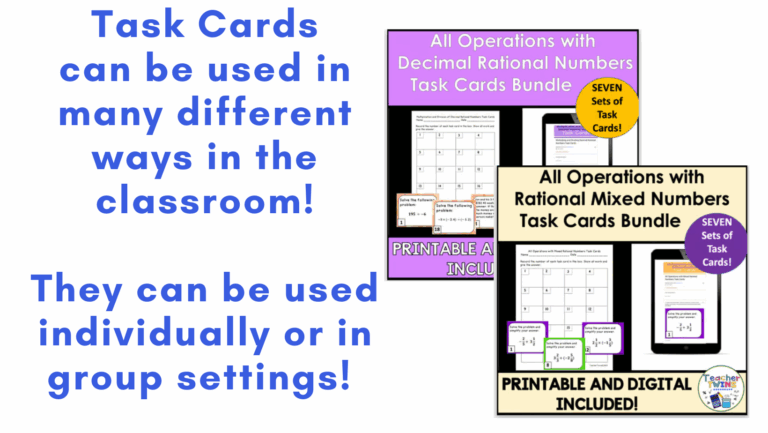
Task cards are a flexible and effective tool for teaching rational numbers. These small, portable cards contain specific problems or questions that students need to solve, making them great for both individual practice and group activities. Incorporating task cards into your lessons adds a hands-on element that keeps students engaged and motivated.
Their versatility allows them to be used in a variety of ways—whether as part of math centers, games, or quick warm-up activities. Overall, task cards offer an enjoyable and practical approach to reinforcing students’ understanding and retention of rational number concepts.
Teaching Rational Numbers with Scavenger Hunts
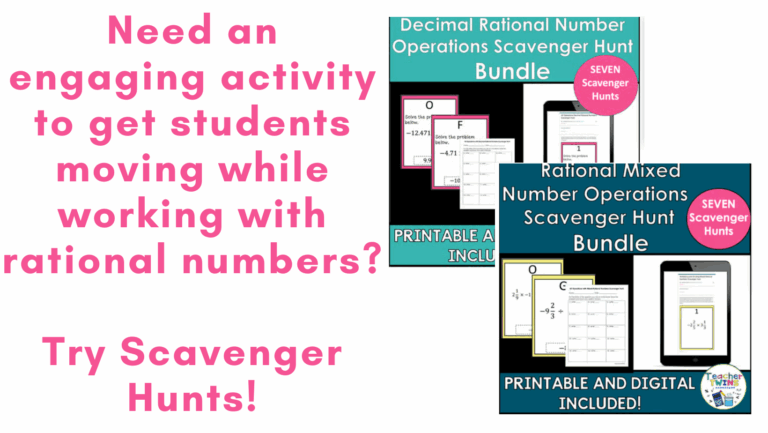
Scavenger hunts are an exciting and interactive way to teach rational numbers, combining physical activity with problem-solving skills. This method involves hiding clues or problems related to rational numbers around the classroom, which students must find and solve. By turning the learning process into a fun and competitive game, scavenger hunts can significantly increase student engagement and motivation.
One of the main advantages of using scavenger hunts is that they encourage students to apply their knowledge of rational numbers in a practical and hands-on manner. As students move from one clue to the next, they must use their problem-solving skills to solve addition, subtraction, multiplication and division of rational number problems. This helps reinforce their understanding of rational numbers while also developing their critical thinking and reasoning skills.
Using Digital Activities to Teach Rational Numbers
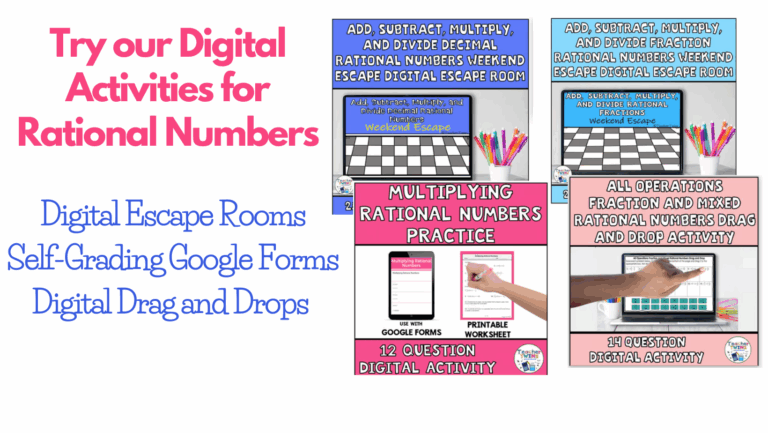
Incorporating technology into the classroom can provide students with an interactive approach to learning rational numbers. Digital drag and drop activities, digital escape rooms and Google Forms are excellent tools that can make mathematical concepts more accessible and engaging for students. These activities are particularly effective because they provide immediate feedback, allowing students to learn from their mistakes and correct them in real-time.
Using digital tools like drag and drop activities and Google Forms into your lessons can transform the way you teach rational numbers. These tools not only make learning more interactive and engaging but also provide valuable feedback that can help in your teaching. By using technology in the classroom, you can create a dynamic learning environment that helps students master rational numbers with confidence.
Conclusion
In conclusion, a strong understanding of rational numbers is crucial for students as they progress in their mathematical journey. This foundational concept lays the groundwork for tackling more advanced topics in high school and beyond.
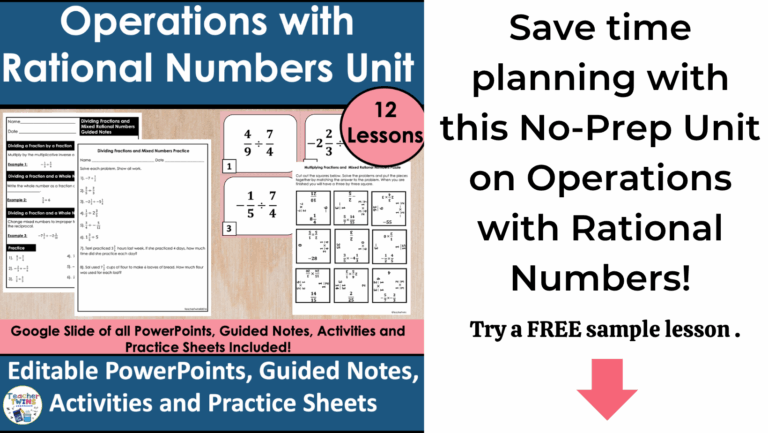
If you need help teaching rational numbers try our no-prep unit on Rational Numbers!
We use cookies to ensure that we give you the best experience on our website. If you continue to use this site we will assume that you are happy with it.